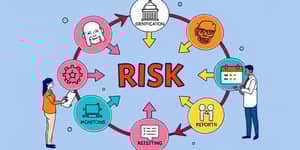
In today’s fast-changing world, organizations face an ever-increasing array of threats—from cyberattacks to market volatility, regulatory shifts to supply chain disruptions. To navigate this landscape, leaders must design a risk framework that not only protects but also propels their organization forward. Architecting assurance is about weaving structured processes, governance, and culture into a unified system that transforms uncertainty into opportunity.
This article guides you through the philosophy and practical steps to create a robust framework that aligns risk management with strategic goals. You will discover core components, phased approaches, best practices, and metrics that drive lasting resilience.
Why a Risk Framework Matters
Every organization, regardless of size or sector, exists within an ecosystem of risks and rewards. A well-structured framework provides clarity, consistency, and confidence in decision-making. It ensures that risks are identified, assessed, treated, and monitored in line with corporate objectives, regulatory demands, and stakeholder expectations.
Without a formalized approach, teams risk responding to threats in isolation, leading to duplicated efforts, gaps in coverage, and misaligned priorities. Conversely, a unified framework fosters cross-functional alignment, enabling organizations to harness volatility and extract value from emerging patterns.
- Strategic alignment: Ensures risk actions support business goals.
- Data-driven insights: Leverages analytics for proactive responses.
- Continuous oversight: Maintains vigilance through monitoring and reporting.
- Regulatory confidence: Demonstrates compliance and governance rigor.
Core Components of a Robust Framework
A comprehensive risk framework typically includes five pillars: identification, assessment, mitigation, monitoring, and governance. While models like ISO 31000 or COSO ERM label and organize these elements differently, their essence converges on a cycle of continuous improvement.
Below is an overview of each pillar and the key activities that bring them to life:
- Risk Identification: Brainstorm risks through SWOT workshops, analyze historical events, and categorize them by type—financial, operational, strategic, or reputational. Assign a single owner to each risk to foster accountability.
- Risk Assessment: Evaluate inherent and residual risks using qualitative scales or quantitative models. Measure likelihood, impact, and velocity to prioritize attention and allocate resources effectively.
- Risk Mitigation/Treatment: Define strategies—avoidance, reduction, transfer, or acceptance. Implement specific controls, such as quarterly audits, escalation protocols, and insurance policies, to reduce exposure.
- Monitoring & Reporting: Track Key Risk Indicators (KRIs) and emerging threats via dashboards and periodic reports to leadership. Ensure stakeholders receive timely updates and can recalibrate priorities as conditions evolve.
- Governance & Culture: Establish board oversight, articulate risk appetite and tolerances, and embed a risk-aware culture. Clarify roles across the three lines of defense, and invest in training to sustain momentum.
Comparing Popular Frameworks
Organizations often adopt or blend established standards to suit their context. The table below highlights how leading frameworks address core components:
Steps to Build Your Framework
Translating theory into practice involves a phased approach. Each stage lays the groundwork for the next, creating an upward spiral of resilience and insight.
- Establish Foundations: Define objectives, scope, and the organization’s risk appetite. Craft an ERM mission statement, align with strategic priorities, and secure executive sponsorship.
- Governance & Culture: Assign board and executive roles, draft policies, and foster leadership commitment. Promote cross-functional collaboration through workshops, trainings, and recognition programs.
- Data & Insights: Identify internal and external data sources—transactional logs, social sentiment, market indicators. Develop analytics to spot correlations, interdependencies, and early warning signals.
- Execute Core Processes: Launch iterative cycles of identification, assessment, treatment, and monitoring. Maintain a living risk register and update it as new information surfaces.
- Implement Assurance: Build detailed plans with timelines, KPIs, and resource allocations. Integrate risk activities into quality management, audit schedules, and operational reviews.
- Review & Evolve: Regularly revisit the framework to incorporate lessons learned, address new regulations, and capitalize on market shifts. Encourage feedback loops and continuous learning.
Overcoming Challenges and Embracing Best Practices
Building a robust framework is not without obstacles. Common challenges include quantifying complex model risks, aligning diverse data streams, and embedding a genuine culture shift. Organizations can counter these challenges by leveraging the following best practices:
- Secure executive sponsorship to champion the initiative.
- Standardize processes and scales across all business units for consistency.
- Invest in technology platforms that automate monitoring and reporting.
- Promote ongoing training to sustain a risk-minded workforce.
- Integrate risk reviews with strategic planning and budgeting cycles.
Measuring Success and Driving Continuous Improvement
Every framework must deliver measurable value. Key metrics include:
- Percentage of risks with assigned owners and documented controls.
- Time taken to detect and respond to emerging risks.
- Stakeholder satisfaction scores on risk reporting and transparency.
- Improvement in objective achievement—formal risk plans boost success rates by 20%.
Beyond metrics, success stories often reveal intangible benefits: stronger stakeholder trust, a proactive mindset, and the ability to seize opportunities in times of change. When risk management becomes a source of competitive advantage, organizations unlock new horizons of innovation and growth.
Architecting assurance is not merely a compliance exercise; it is a strategic imperative. By embedding a comprehensive risk framework, you equip your organization to weather storms, harness emerging trends, and emerge stronger on the other side. Begin today—map your risks, align your people, and build the resilient organization of tomorrow.
References
- https://www.wrike.com/blog/risk-management-framework/
- https://validato.io/what-are-the-key-components-of-a-risk-management-framework/
- https://www.baringa.com/en/insights/de-risking-risk/building-firmer-risk-framework/
- https://www.doublechecksoftware.com/ten-10-key-elements-in-a-robust-risk-management-framework-rmf/
- https://www.metricstream.com/learn/risk-assurance.html
- https://www.6sigma.us/six-sigma-in-focus/pillars-of-risk-management/
- https://www.youtube.com/watch?v=sjLdh4mNxw8
- https://www.navex.com/en-us/blog/article/risk-management-frameworks-for-organizations/
- https://www.fieldguide.io/resource-articles/how-to-build-operational-risk-management-framework
- https://hallorancg.com/insights/2019/05/17/4-key-ingredients-of-a-robust-risk-management-framework
- https://www.splunk.com/en_us/blog/learn/risk-management-frameworks.html
- https://www.bcg.com/publications/2024/simple-risk-assurance-boosts-process-industries-performance
- https://www.clearpointstrategy.com/blog/risk-management-framework-guide
- https://www.deloitte.com/uk/en/Industries/financial-services/blogs/2023/mobilising-an-aligned-assurance-framework--common-challenges-for-asset-managers.html