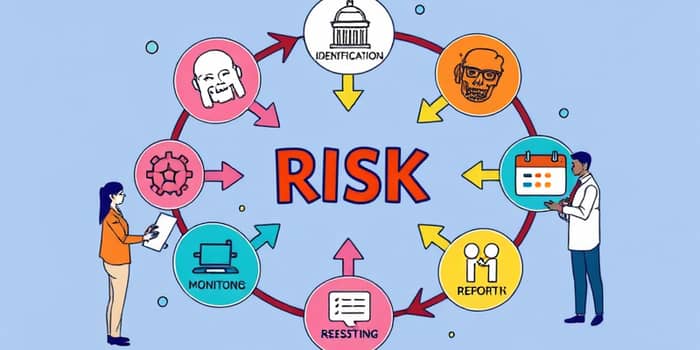
In today’s rapidly evolving landscape, the ability to navigate uncertainty is not just an advantage—it’s a necessity. The risk lifecycle provides a structured roadmap that guides organizations from spotting threats to achieving enduring resolution.
What Is the Risk Lifecycle?
The risk lifecycle is a continuous, cyclical risk process designed to help teams systematically identify, assess, respond to, and monitor risks. This approach transforms potential threats into managed, transparent risk management activities rather than leaving them to disrupt operations.
Grounded in recognized standards like ISO 31000, this framework fosters informed decision-making and enterprise-wide resilience, enabling organizations to align risk strategies with their core objectives.
Core Stages Explained
While various models may define anywhere from three to seven stages, most converge on five essential phases that create a seamless flow toward risk resolution:
- Identification
- Assessment/Analysis
- Response/Mitigation
- Monitoring/Review
- Reporting/Documentation
Understanding Risk Categories
A solid risk strategy begins with recognizing the domains in which threats can emerge. Typical categories encompass:
- Operational disruptions affecting processes and outputs
- Financial uncertainties like market volatility or credit risk
- Legal and regulatory compliance challenges
- Technological vulnerabilities and cybersecurity breaches
- Reputational impacts on brand and stakeholder trust
- Supply chain interruptions or vendor failures
Each category demands tailored identification methods and specialized expertise to ensure comprehensive coverage.
Stage-by-Stage Breakdown
Below is a concise summary that captures each core phase, its primary objective, and typical activities:
By reinforcing each stage with the right tools and processes, organizations can maintain a living, adaptive risk register that evolves alongside their operations.
Stage 1: Risk Identification Phase
This foundational phase calls for a deep dive into both internal operations and external pressures. Techniques include historical data reviews, expert interviews, scenario planning, and trend analysis. Teams define scope and objectives clearly, ensuring that all stakeholders understand what assets and activities are at risk.
Brainstorming sessions and risk workshops often yield overlooked threats. Documenting these in a centralized, enterprise-wide risk register creates a single source of truth, which is crucial for later prioritization.
Stage 2: Risk Assessment and Analysis
With risks identified, moving to quantification helps to focus resources effectively. Using qualitative descriptors or numerical scales, teams evaluate likelihood and potential impact. A 5×5 risk matrix visualizes these dimensions, making it easy to spot high-priority risks.
Assessment also involves gap analysis, comparing existing controls against required standards. This step highlights areas where additional measures or resources are necessary to align with organizational risk appetite and tolerance.
Stage 3: Response and Mitigation Planning
During this planning stage, risk owners evaluate treatment options—whether to avoid, mitigate, transfer, or accept. Creating actionable plans involves assigning responsibilities, defining milestones, and setting budgets.
Leveraging technology—such as automated workflows, AI-based scoring, and GRC platforms—can accelerate implementation and ensure consistent application of controls across the enterprise.
Stage 4: Continuous Monitoring and Review
Risks and controls rarely remain static. Continuous tracking and reviews through dashboards, threshold alerts, and regular assessments keep the organization informed about new developments. Periodic audits and after-action reviews capture lessons learned, reinforcing an iterative and continuous process.
Agile teams often embed risk check-ins into sprint cycles or project milestones, ensuring that emerging threats are addressed in real time.
Stage 5: Reporting and Documentation
Clear, timely communication of risk status to stakeholders is vital. Customized reports, interactive scorecards, and updates to the risk register offer transparent documentation for decision-makers.
When thresholds are met and controls prove effective, risks can be formally closed out—completing the loop from identification to resolution.
Best Practices for Effective Risk Management
To harness the full potential of a robust risk lifecycle, consider these actionable strategies:
- Embed risk thinking across every level of the organization
- Leverage advanced analytics and real-time dashboards
- Foster open communication and encourage near-miss reporting
- Invest in ongoing training and risk awareness programs
- Integrate risk processes with strategic planning
- Continuously refine based on lessons learned
Applying these practices cultivates a proactive stance, shifting the organization from fire-fighting mode to a state of proactive enterprise risk resilience.
Building a Culture of Risk Awareness
Tools and frameworks alone are not enough. True resilience emerges when risk management becomes part of the organizational DNA. Leaders must foster an environment where reporting concerns is valued, success stories are celebrated, and accountability is clear.
Regular town halls, cross-functional workshops, and integrated project reviews ensure that risk awareness remains top of mind. Over time, this cultural evolution strengthens trust, preserves institutional knowledge, and empowers teams to adapt swiftly to new challenges.
Ultimately, the risk lifecycle is a journey rather than a destination. By embracing each phase and committing to continuous improvement, organizations transform uncertainty into strategic advantage—navigating complexity with confidence and care.
Start reviewing risk processes today by engaging stakeholders, leveraging tools, and embedding risk management into every decision.
References
- https://www.euriun.com/risk-lifecycle/
- https://www.cobblestonesoftware.com/blog/risk-management-lifecycle-stages
- https://www.securityscientist.net/blog/risk-lifecycle-and-risk-assessment-lifecycle-understanding-the-complete-process/
- https://www.metricstream.com/learn/risk-management-process.html
- https://www.360factors.com/blog/five-steps-of-risk-management-process/
- https://www.vectorsolutions.com/resources/blogs/three-phases-risk-assessment-risk-management-basics/
- https://www.appvizer.com/magazine/operations/project-management/risk-management-lifecycle
- https://www.avetta.com/blog/the-7-steps-of-a-risk-management-process
- https://www.alertmedia.com/blog/risk-management-lifecycle/
- https://www.strikegraph.com/blog/what-are-the-6-stages-of-risk-management
- https://offices.depaul.edu/risk-management/enterprise-risk-management/lifecycle/Pages/default.aspx
- https://www.projectmanager.com/blog/risk-management-process-steps
- https://compyl.com/blog/risk-management-lifecycle-explained/