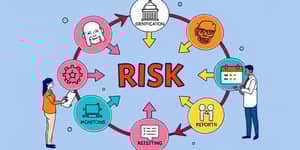
In today’s hyperconnected landscape, a single disruption can unleash a cascade of failures that reverberates across industries and borders. Understanding how risks interlink is essential for building true organizational resilience and preventing one event from spiraling into a systemic crisis.
Defining the Domino Effect in Risk Management
The domino effect in risk management refers to a chain reaction of events triggered by one initial risk occurrence, where interconnected vulnerabilities amplify impacts as they spread. No risk stands alone: each breach, shock or failure can ripple across functions, geographies, and stakeholders.
Risk professionals emphasize that when one piece falls, the rest may follow unless safeguards interrupt the sequence. Viewing risk in isolation creates blind spots, while embracing interconnection fosters proactive mitigation and strategic foresight.
Key Characteristics of the Domino Effect
Several defining features shape how cascading failures unfold within complex systems:
- Cascading impact across multiple sectors: Initial events materialize into other risks with compounding consequences.
- Multiple pathways of propagation: A single trigger can branch into diverse channels or converge with other risks.
- Time and delay considerations: Lags between cause and effect require temporal modeling to capture hidden exposures.
- Amplification through organizational complexity: Intricate operations and interdependencies magnify cascade potential.
- Disproportionate system-wide network reactions: Interconnected networks may respond unpredictably, intensifying impacts.
Real-World Examples of Cascading Risks
Examining actual events reveals how diverse sectors experience the domino effect:
- Cyber-attack on IT infrastructure: Breaches trigger data loss, financial harm, and reputational damage that undermine customer trust and investor confidence.
- Geopolitical conflicts and supply chain disruptions: Conflict-driven energy shortages lead to inflationary pressure, workforce strain, and technological failures.
- Extreme weather events compromising infrastructure: Flooding can disable data centers and disrupt logistics, cascading service outages across financial and mobility networks.
- Global pandemic cascading economic impact: COVID-19 began as a health crisis before causing GDP contractions, labor market shocks, and social disruption.
- Supplier outage triggering market access challenges: One vendor’s failure sparks compliance breaches, production delays, and customer dissatisfaction.
Global Risk Interconnections
The World Economic Forum’s Global Risk Nexus identifies systemic risks that overlap and strengthen one another. Four drivers heighten the domino effect, bridging finance, technology, and the environment:
Factors That Intensify the Domino Effect
Interconnectedness and complexity fuel cascading failures. Organizations with extensive third- and fourth-party networks face hidden exposures that can trigger sudden shocks far from the initial breach.
Low preparedness, outdated legacy systems, and minimal scenario testing deepen vulnerability. When defenses are narrow or siloed, a local incident can rapidly escalate into an enterprise-wide crisis.
Mitigation and Management Strategies
To disrupt potential cascades, risk leaders employ integrated, forward-looking methods that reveal interdependencies and strengthen response capabilities.
- Scenario analysis and simulation: Model potential events and map out interdependent consequences to inform contingency planning.
- Holistic risk assessment approaches: Leverage surveys and visual risk relationship presentations to guide senior leadership decisions.
- System dynamics modeling techniques: Integrate qualitative and quantitative data to identify convergent risks and test mitigation strategies.
- Critical path management methodologies: Focus on interconnection points rather than isolated tasks to reduce vulnerability clusters.
- Cross-sector multi-disciplinary collaboration frameworks: Foster cooperation across departments and external partners for cohesive, aligned responses.
Importance of Integrated Risk Approaches
Traditional siloed risk models fail when events span multiple domains. Ignoring interconnections is often cited as a company’s greatest risk. Organizations that treat risk as a unified system can anticipate cascading events, enhance contingency planning, and recover more effectively.
By adopting an enterprise-wide perspective on risk, decision-makers avoid myopic decision-making under stress and allocate resources where they have the greatest systemic impact.
Evolving Industry Context and the Way Forward
Risk management has shifted from narrow, transaction-focused views to comprehensive, systemic approaches. Today, professionals employ advanced analytics, real-time monitoring, and collaborative governance frameworks to navigate complexity.
Embedding continuous monitoring and adaptive controls into organizational culture enables dynamic risk assessment and early detection of emerging threats. As interconnected risks intensify in scope and speed, resilience will depend on proactive identification of potential domino effects and agile execution of integrated response plans.
Ultimately, understanding the domino effect empowers organizations to transform reactive crisis management into strategic foresight. By illuminating hidden interdependencies, leaders can build robust systems that not only withstand shocks but emerge stronger in an ever-connected world.
References
- https://elion.co.in/the-domino-effect-understanding-consequences-through-risk-modelling/
- https://riskandcompliancemagazine.com/navigating-interconnected-risks
- https://www.rims.org/about-us/newsroom/rims-executive-report-understanding-interconnected-risks
- https://unidir.org/focus-area/interconnected-global-risks/
- https://www.pmi.org/learning/library/system-dynamics-project-risk-management-6242
- https://www.dtcc.com/dtcc-connection/articles/2022/october/26/addressing-increasing-sources-of-interconnectedness-risk-to-ensure-resilience
- https://www.grc2020.com/2020/06/10/the-pandemic-the-dominos-of-risk-interconnectedness/
- https://www.mapfreglobalrisks.com/en/risks-insurance-management/article/interconnected-risks-experience-in-the-face-of-uncertainty/
- https://www.metricstream.com/blog/irm-is-the-mantra-to-manage-interconnected-risks.html
- https://www.jbs.cam.ac.uk/centres/risk/publications/managing-multi-threat/systemic-risk-systemic-solutions-for-an-increasingly-interconnected-world/
- https://www.moodys.com/web/en/us/kyc/resources/insights/unified-risk-management-in-an-era-of-interconnected-risk.html
- https://es.weforum.org/publications/global-risks-report-2024/in-full/responding-to-global-risks/
- https://www.bluevoyant.com/resources/government-third-party-risk-domino-effect
- https://prezi.com/p/y46bqsm0kzjj/understanding-the-domino-effect-in-industry/