In today’s fast-paced world, some dangers lurk unnoticed until it’s too late. Often called "silent killers," these risks carry a small chance of occurring but unleash devastating consequences when they strike. By shedding light on these threats, organizations and individuals can transform uncertainty into opportunity and build lasting strength.
Understanding Low Probability, High Impact Risks
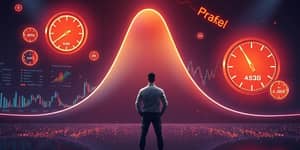
Low probability, high impact risks are events that exist on the fringes of possibility but have the potential to upend entire systems. Their defining characteristics include stealth, invisibility and a narrow window between detection and disaster. Much like a hidden fault line before an earthquake, these threats remain dormant until they erupt.
Despite their rarity, history offers sobering reminders: the 2008 financial collapse, the COVID-19 pandemic and other global shocks reshaped economies and societies. These episodes reveal how interconnected markets, technology and geopolitics act as modern amplifiers of latent vulnerabilities, turning small sparks into wildfires.
Why These Threats Go Unnoticed
Psychological biases and structural barriers often blind us to extreme risks. Overconfidence breeds complacency, and an emphasis on short-term metrics sidelines long-term stability. In many organizations, warnings are suppressed by a culture of silence and fear of reprisal, while functional silos prevent cohesive action.
- Complacency from past success leads to risk blindness.
- Short-termism prioritizes immediate gains over future threats.
- Probability neglect dismisses unlikely scenarios as unworthy.
Lessons from Catastrophes
Real-world failures underscore the stakes. From rogue trading to pandemics, each case offers vital insights:
- Barings Bank collapse (1995): Unauthorized trades by a lone individual caused a systemic failure. Lack of segregation, ignored reconciliations and overreliance on reputation proved fatal.
- 2008 financial crisis: Complex derivatives and hidden exposures triggered cascading defaults. A failure to recognize interdependencies turned a credit hiccup into a global recession.
- COVID-19 pandemic: Despite repeated warnings, supply chains, health systems and economies faltered. This crisis highlighted the impact of nonlinear cascading system failures in a hyperconnected world.
Identifying and Assessing Silent Killers
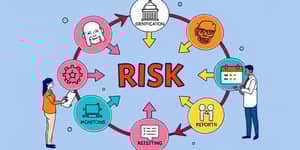
Proactive detection hinges on robust tools and frameworks. A risk radar or matrix plots likelihood against severity, guiding resource allocation. Horizon scanning and scenario planning reveal emerging threats, while early-warning systems generate alerts despite false positives.
For consistency, many organizations use a five-level probability scale. Charting impact separately ensures balanced responses, from proportional controls for unlikely events to full contingency plans for probable hazards.
By pairing this with an impact scale—ranging from manageable inconveniences to project killers—leaders gain a clear map for prioritization. A holistic enterprise risk management approach embeds this view into strategy and governance.
Building Organizational Resilience
Mitigation demands more than controls; it requires adaptability. Engineering solutions and administrative processes reduce exposure, while stress-testing reveals breaking points. Cross-functional coordination and independent audits close blind spots, and diversification spreads risk across people, suppliers and technology.
- Implement an enterprise-wide framework with clear ownership and accountability.
- Conduct regular scenario drills to test contingency plans.
- Foster cross-functional teams to break down silos and share insights.
By embedding redundancy and backup channels, organizations can absorb shocks without catastrophic collapse. A culture that values vigilance over denial turns potential crises into controlled learning moments.
Embracing a Culture of Vigilance
Ultimately, guarding against silent killers requires leadership that values foresight as much as performance. Encourage open dialogue, reward critical thinking and maintain a relentless focus on emerging threats. When teams feel empowered to speak up, unseen hazards are more likely to surface before they strike.
By weaving resilience into every decision and process, we embrace strategic resilience in every decision and transform uncertainty into strength. In a world of unpredictable black swans, preparedness and adaptability are the greatest shields against disaster.
References
- https://www.proxxi.co/blog/low-probability-high-impact-risks
- https://riskmgtstrategies.com/killer-risks-the-silent-threats/
- https://www.rmmagazine.com/articles/article/2021/02/01/-How-to-Address-Low-Probability-High-Impact-Risks-
- https://www.adultdevelopment.uk/the-seven-silent-killers-of-strategic-change
- https://advisers.sfpadvice.co.za/profile/robert-lang/blogs/the-10-silent-killers-that-can-close-your-business
- https://sloanreview.mit.edu/article/the-silent-killers-of-strategy-implementation-and-learning/
- https://humanrisks.com/blog/managing-low-probability-high-impact-risks/
- https://www.davidsonwp.com/six-silent-killers-of-strategy-implementation
- https://blog.sintef.com/energy/hilp-tools-methods-high-impact-low-probability-event-analysis/
- https://www.youtube.com/watch?v=PVFHHyQa-lM
- https://www.amanet.org/articles/seven-silent-business-killers/